
10 Cheap High-Protein Foods (With Cost Per Serving)
10 Cheap High-Protein Foods (With Cost Per Serving)
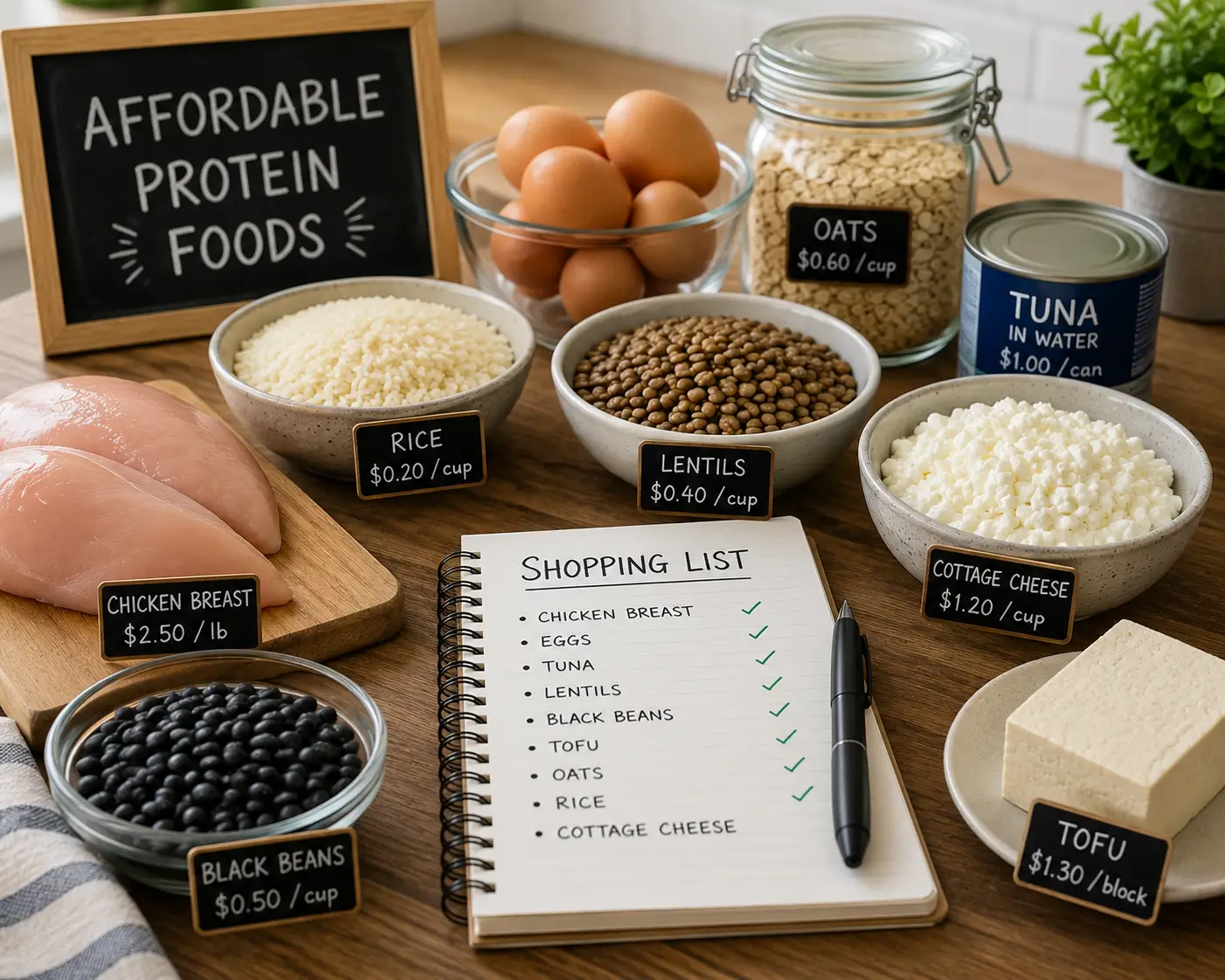
If you want cheap high protein foods that actually fit a tight budget, start with the basics: eggs, beans, chicken, yogurt, and lentils. These give you roughly 15 to 30 grams of protein per serving for around 0.30 to 1.25 dollars.
Below I will walk you through 10 of my go-to budget protein picks, what they cost per serving in real US grocery stores, and how much protein you actually get. I track this the same way I track my own grocery bill: price per container, divided by realistic serving sizes I actually eat.
For exact prices in your area, you will want to adjust based on local sales and store brands, but this list will give you a solid, practical starting point.
How did I estimate "cheap" protein per serving?
Before we get into specific foods, here is how I am defining cheap high-protein foods for this article:
- Roughly 0.20 to 1.25 dollars per serving
- At least 10 grams of protein per serving
- Reasonably easy to find in a typical US grocery store or big box store
I used current prices from a mix of national chain supermarkets and big box stores in a mid-cost US city. I picked store brands when possible and rounded to the nearest 5 cents to keep it realistic, not hyper precise.
Protein amounts come from typical nutrition labels and USDA data. If you want a deeper breakdown of how much protein you need each day, bookmark FitPlate's Ultimate Guide to Protein.
Quick note: Prices will vary in your area. Focus less on the exact number and more on which foods consistently give you the most protein for your dollar.
Summary table: Which cheap high protein foods are best per dollar?
Here is a quick comparison of the 10 foods in this article.
| Food | Approx cost per serving (USD) | Protein per serving (g) |
|---|---|---|
| Dry lentils (cooked) | 0.25 | 18 |
| Dry black beans (cooked) | 0.25 | 15 |
| Eggs | 0.30 | 12 |
| Peanut butter | 0.30 | 8 |
| Greek yogurt (plain) | 0.90 | 17 |
| Cottage cheese | 0.85 | 14 |
| Tofu (firm) | 0.75 | 14 |
| Canned tuna | 1.00 | 26 |
| Canned chicken | 1.00 | 21 |
| Frozen chicken thighs | 1.25 | 25 |
Next, we will go food by food so you can see where each one fits in your own budget.
1. Eggs: Are eggs still a cheap high protein food?
Short answer, yes. Even when egg prices spike, they are still one of the most reliable budget protein staples.
Typical serving: 2 large eggs Protein: about 12 g Approx cost per serving: ~0.30 dollars (assuming around 2.50 dollars per dozen)
Why eggs are a solid budget protein:
- They cook fast. Scrambled, hard-boiled, or microwaved in a mug.
- They work at any meal. Egg burritos for dinner, frittata from fridge leftovers, or a quick fried egg over rice.
- They are complete protein, which matters if you are eating mostly plant-based otherwise.
Cost and shopping tips for eggs
- Buy 18-count cartons instead of 12 when unit price is lower.
- Store-brand large eggs are usually the best price per gram of protein.
- When eggs are on sale, hard-boil a dozen at once. They keep about a week in the fridge.
If you are tight on breakfast time, I sometimes boil a full pot of eggs on Sunday evening. Having 8 or 10 ready to grab keeps me from defaulting to a pastry at work.
2. Dry lentils: The cheapest plant-based protein per serving
Dry lentils are one of the lowest cost per gram of protein that you can find, especially if you cook a big batch.
Typical serving: 1 cup cooked lentils Protein: about 18 g Approx cost per serving: ~0.25 dollars (based on a 2 pound bag around 2.00 dollars)
Why lentils are budget friendly
- They cook faster than most beans, usually 20 to 25 minutes.
- No soaking needed, which is perfect for weeknights.
- They take on flavor from whatever you cook them in, from curry to chili.
Cost and shopping tips for lentils
- Skip pre-cooked pouches. Dry lentils in a bag are dramatically cheaper per serving.
- Brown or green lentils are usually the best value compared to fancy varieties.
- Make a big batch, then freeze in 1 cup portions for quick meals.
A simple cheap meal I use a lot: lentils simmered with canned tomatoes, onion, garlic, and a spoon of whatever spice blend is in the cabinet, served over rice.
3. Dry black beans: How do they compare for budget protein?
Black beans are another powerhouse if you buy them dry instead of canned.
Typical serving: 1 cup cooked black beans Protein: about 15 g Approx cost per serving: ~0.25 dollars (around 1.50 to 2.00 dollars for a 1 pound bag)
Why black beans make sense on a budget
- High in both protein and fiber, which means they keep you full.
- Great for batch cooking and freezing.
- Easy to season for Mexican, Latin, or Caribbean style dishes.
Cost and shopping tips for beans
- Dry beats canned on price, especially if you eat beans several times per week.
- If using canned for convenience, rinse them. You reduce sodium and still keep the protein.
- A cheap slow cooker can pay for itself just in beans and lentils over a few months.
I typically soak black beans overnight, then cook a full pound with onion and bay leaves on Sunday. Half go into burrito bowls, the rest into a big pot of chili.
4. Peanut butter: Is peanut butter a good affordable protein?
Peanut butter is not pure protein, but as a budget protein add-on, it is hard to beat.
Typical serving: 2 tablespoons Protein: about 8 g Approx cost per serving: ~0.30 dollars (for a 16 ounce jar around 2.50 dollars)
Why peanut butter helps on a budget
- It is shelf stable and does not need cooking.
- Works for snacks, smoothies, or spread on cheap foods like oats and bananas.
- Pairs well with other protein sources, like Greek yogurt.
Cost and shopping tips for peanut butter
- Store-brand or big jars usually win on cost per ounce.
- Check the unit price tag on the shelf instead of the sticker price.
- If you want fewer additives, look for the two ingredient version, peanuts and salt.
One of my go-to 2 minute snacks is a sliced apple with a big spoon of peanut butter. You get around 8 grams of protein plus fiber, for well under a dollar.
5. Greek yogurt: Which type is most cost effective?
Greek yogurt can look expensive at first, but per gram of protein, it is usually a strong value.
Typical serving: 3/4 to 1 cup (about 170 to 200 g) Protein: about 15 to 20 g, depending on brand Approx cost per serving: ~0.90 dollars (about 5 dollars for a 32 ounce tub)
Why Greek yogurt belongs on a budget protein list
- High protein for the calories, very versatile.
- Works for breakfast, snacks, and even as a sour cream substitute.
- Pairs easily with cheaper carb and fat sources for a full meal.
Cost and shopping tips for Greek yogurt
- Buy large tubs, not single-serve cups. You usually save a lot per serving.
- Plain, unsweetened yogurt is cheaper and you can sweeten it yourself.
- Watch flavored options. You often pay more for sugar and marketing, not protein.
A common cheap breakfast for me: 1 cup Greek yogurt, a handful of frozen berries, and a sprinkle of store-brand granola. It comes out to roughly 40 cents of berries, 25 cents of granola, and 90 cents of yogurt.
6. Cottage cheese: Is cottage cheese still a budget protein star?
Cottage cheese has made a comeback because of its high protein content. It is also typically cheaper per gram of protein than most fancy protein snacks.
Typical serving: 1/2 cup to 1 cup Protein: about 14 g per 1/2 cup Approx cost per serving: ~0.85 dollars (assuming 4.50 dollars for a 24 ounce tub)
Why cottage cheese works when money is tight
- Very high protein and pretty filling.
- Works with sweet (fruit) or savory (tomatoes, pepper, hot sauce).
- No cooking needed, just open and eat.
Cost and shopping tips for cottage cheese
- Compare unit prices among store brands. Curds and macros are usually similar.
- Larger tubs often win on price per ounce, as long as you actually finish them.
- If you do not like the texture, blending cottage cheese smooth makes it feel more like yogurt.
Try it mixed with pineapple chunks or tomatoes, salt, and a shake of black pepper. Both versions are cheap and surprisingly satisfying.
7. Tofu: How cheap is tofu per gram of protein?
Tofu is usually one of the cheapest high protein foods in the store, especially for plant-based eaters.
Typical serving: 3 to 4 ounces (about one quarter of a 14 ounce block) Protein: about 10 to 15 g, depending on firmness Approx cost per serving: ~0.75 dollars (3.00 dollars for a 14 ounce block)
Why tofu is a strong budget protein choice
- Takes on flavor from sauces and marinades easily.
- Works in stir-fries, curries, scrambles, and air-fryer recipes.
- Keeps a few days in the fridge once opened if covered with water.
Cost and shopping tips for tofu
- Extra firm tofu usually has a bit more protein per serving.
- Look for multipacks or warehouse store deals if you eat tofu often.
- Skip pre-marinated or pre-cooked tofu. They are convenient, but more expensive.
My budget habit: press a block of extra firm tofu, cube it, toss with soy sauce and a spoon of cornstarch, then pan fry until crisp. One 14 ounce block easily covers two to three meals.
8. Canned tuna: Is canned tuna still an affordable protein?
Canned tuna is still a very good budget protein, especially if you buy in multipacks.
Typical serving: 1 can light tuna, drained (about 5 ounces) Protein: about 26 g Approx cost per serving: ~1.00 dollar (based on around 1 dollar per can in a multipack)
Why canned tuna belongs on a cheap high protein foods list
- Shelf stable, easy to keep stocked.
- Packs a lot of protein into a small volume.
- Works in sandwiches, tuna salad, or tossed with pasta.
Cost and shopping tips for tuna
- Light tuna is usually cheaper than fancy albacore.
- Buy store-brand multipacks when the unit price drops near or under 1.00 dollar per can.
- Flavored pouches are convenient, but you pay more for less protein.
For a fast dinner, I often mix a can of tuna with a bit of mayo, mustard, pickle relish, and serve it on toasted bread or over a big bowl of lettuce and cheap frozen veggies.
9. Canned chicken: How does it compare to tuna on cost?
Canned chicken is slightly more expensive than some options, but the convenience is hard to beat.
Typical serving: 1 can, drained (about 4.5 ounces) Protein: about 21 g Approx cost per serving: ~1.00 dollar (multipack pricing around 2.00 dollars per 10 ounce can, split across two servings)
Why canned chicken is a good backup protein
- Tastes more familiar for people who are not into tuna.
- Easy to toss into soups, quesadillas, or chicken salad.
- Long shelf life, which reduces waste.
Cost and shopping tips for canned chicken
- Compare per ounce prices to tuna and frozen chicken. Use it mostly for convenience meals.
- Watch for salt content if you are monitoring sodium.
- Multipacks are usually the best value.
On days I do not feel like cooking, I will stir canned chicken into jarred pasta sauce and pour it over pasta. It is not fancy, but it gets you around 25 grams of protein quickly.
10. Frozen chicken thighs: The best value meat for protein
If you want meat-based budget protein and are willing to cook, frozen chicken thighs are usually one of the top values.
Typical serving: 1 medium thigh, about 4 ounces cooked Protein: about 25 g Approx cost per serving: ~1.25 dollars (based on bulk bags around 2.00 dollars per pound)
Why chicken thighs beat chicken breast on cost
- Dark meat is usually cheaper per pound than breast.
- Thighs are harder to overcook and stay juicy.
- Bone-in bags of thighs tend to be the lowest price option.
Cost and shopping tips for chicken thighs
- Buy large frozen value packs. Check unit price per pound.
- If you have freezer space, stock up when prices dip under 2.00 dollars per pound.
- Cook a whole tray at once, then use in rice bowls, wraps, or salads.
I often roast 8 to 10 thighs at once on a sheet pan with salt, pepper, and whatever seasoning blend is around. That usually covers 3 or 4 dinners and a couple of lunches.
How can you build cheap high protein meals from these foods?
Once you have a few of these budget protein staples at home, putting together affordable meals gets easier. Here are some simple combinations that stick close to 1 to 2 dollars of protein per meal.
Budget-friendly meal ideas
- Eggs + black beans + rice, topped with salsa
- Greek yogurt + peanut butter + frozen berries
- Lentil and chicken thigh curry over rice
- Tofu stir-fry with frozen vegetables and noodles
- Cottage cheese with fruit and a slice of toast
- Tuna or canned chicken mixed into pasta or rice
To keep the total cost down, pair these proteins with low-cost carb and fat staples, like rice, oats, frozen vegetables, and store-brand oils.
If you want help turning these into a full week of meals, FitPlate can generate a plan around your budget, protein target, and preferences.
Shopping tips: How do you find the best budget protein deals?
Finding affordable protein is part habit, part timing. Here is what has actually made a difference in my grocery bill.
What store strategies save the most money on protein?
- Compare unit prices, not sticker prices. Look at price per ounce or per pound on the shelf tag.
- Buy bigger packs when you know you will use them. Family-size yogurt or bulk chicken can be cheaper if you do not waste it.
- Shop the weekly ad. If eggs or chicken thighs are on sale, plan more meals around them that week.
- Use frozen options. Frozen chicken and vegetables are usually cheaper and reduce waste.
Which cheap high-protein foods should you always keep on hand?
If money is tight, I like to always have:
- A dozen eggs
- One or two bags of dry lentils or beans
- A large tub of Greek yogurt or cottage cheese
- A jar of peanut butter
- A few cans of tuna or chicken
With just those and a bag of rice plus some frozen vegetables, I can usually pull together several days of filling, high protein meals.
How do you avoid wasting food while buying in bulk?
- Cook in batches and freeze in single servings.
- Label containers with the date so you actually use them.
- Plan 1 or 2 "clear out the fridge" meals each week, like stir-fry or omelets.
If you are still figuring out how much food you go through in a week, start smaller, then increase the package sizes once you see what you consistently finish.
FAQ: Cheap high protein foods and budget protein questions
How much protein do I actually need on a budget?
Most active adults feel good aiming for about 0.7 to 1.0 grams of protein per pound of body weight per day, though needs vary based on age, muscle mass, and health conditions [cite: authoritative source]. If you are on a budget, focus on getting a solid source of protein in each meal, then use cheap high protein foods like eggs, lentils, yogurt, and beans to fill the gaps.
Are plant-based proteins cheaper than meat?
Often, yes. Dry lentils, black beans, and tofu usually beat most meats on cost per gram of protein. Meat can still fit a budget, especially frozen chicken thighs and canned tuna, but if you are really trying to cut your bill, leaning on beans, lentils, tofu, and peanut butter will usually save money.
Are protein powders worth it for affordable protein?
Protein powder can be cost effective if you use it consistently and pick simple options. A basic whey or soy protein bought in a big tub can come out to around 0.70 to 1.00 dollars for 20 to 25 grams of protein. If you struggle to hit your protein target with whole foods, it can be a useful tool, but you do not need it if you use the cheap high protein foods in this article.
What is the absolute cheapest high protein meal I can make?
One of the lowest cost options is a bowl of rice and lentils or black beans. A cup of cooked rice plus a cup of cooked lentils can get you around 18 grams of protein for roughly 0.50 to 0.60 dollars. Add a fried egg on top for another 12 grams of protein for around 0.30 dollars more, and you have a meal close to 30 grams of protein for under a dollar.
How can I hit my protein goal if I only cook once or twice a week?
Pick 2 or 3 of the foods in this article that batch cook well, like lentils, chicken thighs, and black beans. Cook larger amounts, portion into containers, and freeze extras. Then fill in with easy grab-and-eat proteins, like Greek yogurt, cottage cheese, peanut butter, and canned tuna. Even with limited cooking time, you can keep budget protein high by planning a bit on your cooking day.
Ready to turn these cheap high protein foods into a full week of meals tailored to your budget and protein needs? Try building a personalized plan with FitPlate.
Ready to eat smarter?
Put this into practice with a personalized weekly meal plan built around your goals and preferences.
Generate your free meal plan
Written by
Marcus Reed
Fitness and Nutrition Writer
Marcus covers eating for muscle and training. He got into nutrition through his own slow, stubborn progress in the gym, and he is more interested in protein targets and consistency than in whatever supplement is trending this month. He writes the guides he wishes he had when he started.
Related posts
How Much Protein Do You Need Per Day?
New to fitness and confused about daily protein intake? Learn simple formulas based on your body weight, see real-life examples, and avoid common protein mistakes.
Ultimate Guide to Protein: Benefits, Intake, And Best Foods
A practical protein guide for adults that explains what protein is, how much you need, the real benefits, the best protein foods, and the biggest myths.
12 Budget-Friendly Foods That Are High in Protein
Discover 12 affordable protein sources that help you maintain a high-protein diet without overspending. Perfect for college students and budget-conscious eaters.